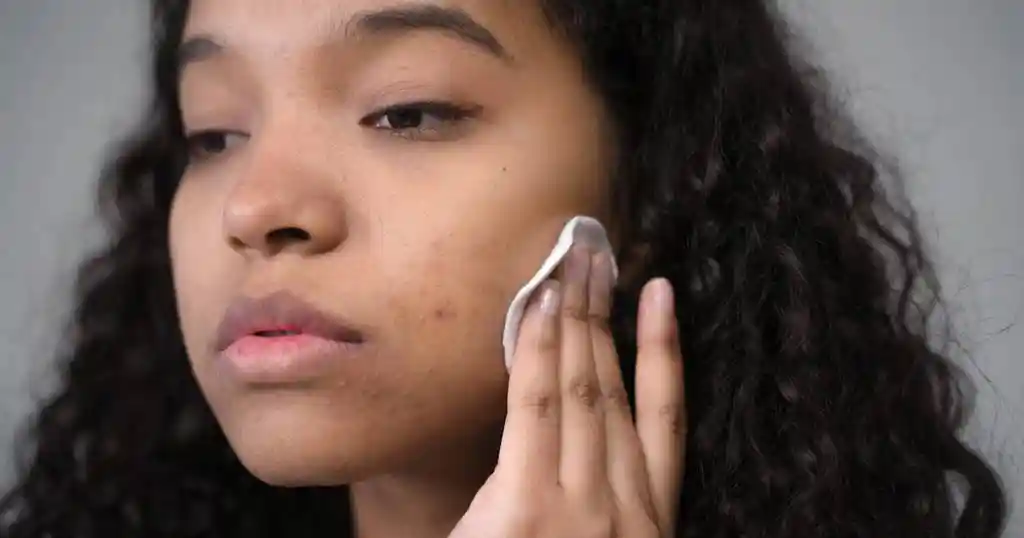
Despite your anxiety-ridden binges of face wash, serum, spot treatments, and diet manipulation, your hormonal acne causes continues to rear its ugly head. This is where you end up − the missing piece of the puzzle in the hormonal acne journey: understanding the root hormonal acne causes.
Acne isn’t simply about dirty skin or needing to use the proper cleanser. This is a tricky one because it’s caused by hormones, your gut health, and the products you use on a day-to-day basis. Let us break it down simply.
The Rules of Your Hormones May Not Be on Your Side
A root cause of stubborn acne that hardly gets any attention are hormones. Excess oil production triggered by androgens clogs pores and feeds the bacteria responsible for acne.
This is especially the case in women who are on their cycle, or in those with PCOS. Hormones are likely the reason why your breakouts have a uniform pattern − worse around your period or during times of stress or a hectic schedule. No topical cream can ever completely correct what is occurring internally.
An Indication That Your Washing Your Face Too Much
More people think washing more will mean clearer skin. That is not true. The skin may become tight and red and − paradoxically − more acne may appear, and these are allover-cleansing symptoms
If you rob your skin of its own natural oils, it responds by secreting even more oil, so you can get more clogged pores. Cleansing twice a day is enough. Anything more endangers seriously your skin’s barrier function.
The Real Issue Could Be Your Skin Barrier
Another key role of the skin barrier is to retain water and prevent the entry of germs. When this layer is broken down through the delicate balance of oils, we experience compromised skin barrier damage which results in inflammation, sensitivity, and constant breakouts.
Some classic offenders are over-exfoliation, abrasive scrubs, and overusing of active ingredients. A skin that feels stinging or raw after applying product means that your barrier is in need of some restoration, not more actives.
Your Products May Be Clogging Your Pores
Our skin barrier acts like a spongy wall that passively lets water in, and this is what ensures that bacteria stay out. Having this layer damaged leads to inflammation, sensitivity, and continuous breakouts due to damaged skin barrier. And this is where non-comedogenic skincare comes into play.
One of the worst offenders is excess exfoliating, scrubbing too hard, and too much active ingredients. Applying products that sting or are irritating to the touch will indicate that your barrier requires repairing, not additional actives.
The Gut-Skin Connection is Real
Your skin is a reflection of your gut health. The gut-skin connection indicates that an imbalance in your gut microbiome leads to inflammation which in turn triggers flare ups of acne.
The insulin boost from a high sugar, dairy, and processed food diet leads to breakouts. Probiotics, fiber, and reduced sugar really do calm your skin from the inside out
Do You Want to Use Correct Treatments?
Many times, over-the-counter creams simply lack the strength to combat an ongoing case of acne. These are the treatments which are proven effective for frightening cases:
- Prescription-grade retinoids for acne − the gold standard because they increase cell turnover, unclog pores (and thus reduce acne) and reduce inflammation
- Hormonal therapies help women whose acne is fueled by imbalances in androgen levels
- When necessary, topical, or oral antibiotics decrease bacterial load
- Peels in clinic and other treatments tend to unclog and make skin feel better more quickly
If you lack a proper diagnosis, you may continue to reach out for ineffective remedies.
Stop Making Assume − But Diagnose the Right Way
Every patient’s skin is different. What works to clear acne for one patient can often exacerbate it for another. Still so many people remain stuck in the same loop by self-treating without understanding the cause.
Dr. Navin Taneja of The National Skin Center Delhi, explains that this is a condition which needs an individualized evaluation of every patient − because different hormonal triggers, skin barriers, and treatment plans exist.
Time to stop guessing and get started on expert care if your acne is unresponsive.
Schedule your consultation with Dr. Navin Taneja, The National Skin Center, Delhi today.
FAQs:
Q: What are the most common hormonal acne causes in women?
A: Common triggers include, PCOS, menstrual cycle changes, pregnancy, and stress. They increase levels of androgens that boost oil production and cause those pesky breakouts to form, particularly around the jawline and chin.
Q: How do I know if I have skin barrier damage?
A: If your skin is tight, stinging after applying products, looking red, or just generally feeling particularly sensitive − these are signs that your skin barrier is compromised. The most common culprits are over-exfoliating and using too many actives at once.
Q: What does non-comedogenic skincare actually mean?
A: It indicates that the product will not block your pores. One of the most simple but effective changes that one could consider for acne-prone skin is to switch to non-comedogenic moisturizers, sunscreens, and make up.
Q: Can fixing my gut health really reduce acne?
A: Yes. This is well-supported by research, the gut-skin connection. A reduction in sugar, dairy, and processed foods and an increase in probiotics and fiber can decrease bodily inflammation which tends to be shown in the skin later on as it comes to the surface − resulting in clearer, calmer skin.
Q. Are prescription-grade retinoids safe for all skin types?
A: When used by a dermatologist, prescription-level retinoids are safe. And they are slowly introduced so that they do not annoy. They’re generally good for most skin types but should always be used with a skin professional for more optimal results.
Disclaimer: This article is only for informational purpose. Please note that your skin is unique, and you should consult a certified dermatologist for diagnosis and individualized therapy.