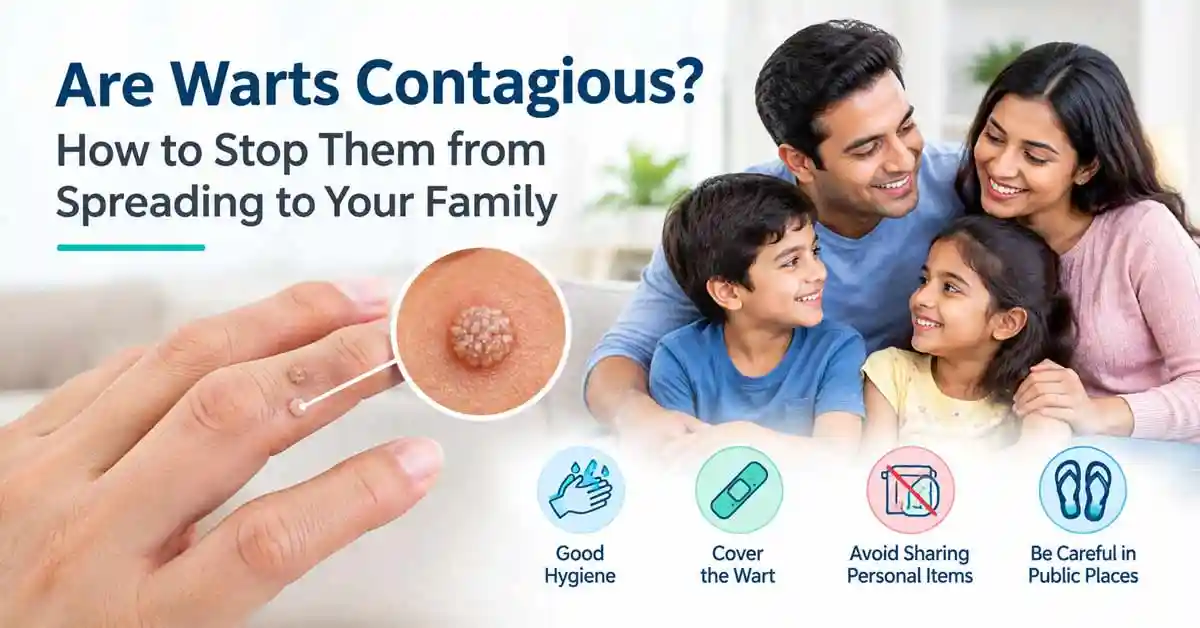
Warts are among the most frequent viral skin infections found in dermatology departments. For instance, most people ask, “Are warts contagious?” when there is one at home. The answer is yes. Specific strains of the human papillomavirus (HPV) cause warts to develop, and these can spread through skin-to-skin contact or by sharing personal items. On a positive note, some basic habits can significantly decrease the risk of transferring them to your family.
What Causes Warts?
Warts are the result of the entry of Human Papillomavirus (HPV) into the skin via microabrasions or breaks in the skin. Once in, it causes skin cells to multiply, leading to the characteristic rough bumps that people typically see on their hands and feet, as well as other parts of the body.
As per the best dermatologist in Delhi for warts treatment, when a wart is identified early for treatment, it becomes easier, and we can also minimize the risk of viral transmission to adjacent skin areas.
How Contagious are Warts?
“How contagious are warts in everyday life?” is a common question for people. Warts are considered moderately contagious. Not everyone infected with the virus will get a wart, but if you damage your skin or are run-down and your immune system is impaired, then the chances of developing one increase.
Several things can make the virus spread more easily:
- A wart is scratched or picked.
- Skin remains damp until late into the night.
- Personal items are shared.
In public pools or locker rooms, being barefoot and having direct contact with contaminated surfaces
How Do You Catch a Wart?
So, the question “How do you catch a wart?” is only answered by exposure to HPV. This virus typically gains entry via very minor cuts that are often imperceptible.
According to the best wart specialist doctor in Delhi, one should avoid shared towels, nail clippers, razors, and footwear, as these items can carry the virus if someone with an active wart used them.
Moles & Warts are Not the Same
Although a mole and a wart have quite different characteristics, it can be easy to confuse one for the other − particularly where there’s a raised skin growth or if either appears to change in appearance. But moles and warts are different: warts come from HPV, and moles develop from the pigment-producing skin cells. Moles are not transmitted like warts, which spread through touch or contaminated items. The best dermatologist for mole removal in Delhi can help identify something as a mole or wart if you’re unsure what a growth is.
Understanding Human Papillomavirus Transmission
Human papillomavirus transmission typically occurs through direct contact with infected skin or contaminated objects. The virus can survive on surfaces for short periods, though skin-to-skin contact is the most common mode of transmission.
Simple hand hygiene precautions and getting existing warts covered can greatly lessen the possibility of transmitting the virus to others.
Are Warts Contagious to Other Parts of the Body?
Yes. Flat warts spreading on the face, neck, arms, or legs are somewhat common, and these often appear in clusters as they are small. Trying to remove them by shaving over or just touching the warts can spread the virus to nearby healthy skin.
The best laser wart removal treatment in Delhi repeatedly warns patients of home removal practices, which entail cutting or scraping warts, as these can potentially increase the chances of spreading the infection.
Can Warts Spread to Family Members?
Parents often ask: Can warts be transmitted to family members? Yes, particularly in homes where towels, slippers, socks, or grooming tools are shared. Children are particularly prone to spread it because they regularly have tiny scratches and are in contact with one another.
Adherence to simple hygiene measures may greatly reduce intra-household transmission.
Simple Guide to Keep Family Safe from Warts
Warts can be naturally prevented, though it can be vexing to prevent them. Follow these simple habits:
This is why you must wash your hands after handling a wart!
Cover the wart with a clean bandage.
Avoid sharing towels, socks, shoes, or nail tools.
Use flip-flops in public showers/pool areas.
Neither should you pick at, scratch, or eat warts.
These small steps are very helpful for keeping warts at bay and mitigating new infections.
When Must You See A Dermatologist?
While several warts resolve on their own, others increase in size and cause pain or spread to neighboring skin. In general, another clear point among home treatment and professional methods which slice to the heart on legitimate of some types will improvement like cryotherapy, safe drugs, electrocautery, or laser therapy are reliant on at least two types.
As stated by one of the best skin doctor in Delhi, specific laser modalities can additionally remove resistant warts that have failed to respond to traditional treatments, thereby helping minimize recurrence and protecting adjacent skin.
Final Thoughts
The answer to “Are warts contagious?” is straight. Some STIs transmit via skin-to-skin contact, and others via body fluids through direct or indirect (e.g., shared items) ways; using preventive techniques to defend against STIs immensely reduces this risk. The best way to prevent warts in your family is to maintain good hygiene, avoid picking at skin, and seek medical attention early. See a dermatologist if a wart changes, hurts, or never goes away for an accurate diagnosis and best treatment.
FAQs
Q: Can you get warts by touching someone else?
A: Yes. Warts are contagious and may spread through contact of skin with the skin or by sharing personal items such as towels, razors, or nail clippers.
Q: 2. Can warts spread to family members?
A: Yes. When the wart remains untreated, or when personal items are shared, it can infect family members or people too close to the covered wart.
Q: How do you catch a wart?
A: You get warts when the human papillomavirus (HPV) enters through little holes or other types of skin injuries.
Q: Can flat warts be spread to another body part?
A: Yes. Those can spread by scratching, picking at, or shaving over the warts − the virus can move into adjoining skin, causing new flat warts.
Q: When should I go to a dermatologist for warts?
A: You may wish to consult a dermatologist if warts are painful, bleed, change in appearance, or do not improve over time.