Keloid scars can be difficult to treat, physically and emotionally. Non-surgical keloid treatment in Delhi has come a long way and many can still see marked improvement without surgery. As a dermatologist, I treat keloids with evidence-based non-invasive approaches designed to flatten the scar, reduce symptomatic complaints, and decrease the chance of recurrence.
Let’s move on to what actually works.
Understanding Keloid Scars
A keloid is an irregular fibrous growth of scar tissue.
It occurs when the body produces too much collagen during the usual healing process.
Key characteristics include:
- Raised, firm texture
- Extension beyond the original injury
- Persistence without spontaneous regression
Common triggers are:
- Acne lesions
- Ear or body piercings
- Surgical incisions
- Burns or trauma
- Insect bites
Keloids can be painful, tight, and itchy. Appearance also affects the patients’ confidence for many of them.
Why Surgery is Not the Go-To Option?
A lot of people are looking for Keloid removal without surgery, and it makes sense.
Even survival alone is associated with high rates of recurrence.
Sometimes the keloid which recurs is larger than the primary lesion.
Contemporary dermatology then emphasizes on non-surgical approaches, especially when managed by the best dermatologist for keloids who knows when and how to safely intervene.
Intralesional Steroid Injections
Intralesional steroid injections for keloids are corticosteroids and are still one of the most efficient first-line treatments.
They work by:
- Suppressing excess collagen production
- Softening dense scar tissue
- Gradually flattening raised areas
- Reducing redness and inflammation
An interval of 3–4 weeks is allowed between treatments.
Key benefits include:
- Minimal downtime
- Controlled and progressive improvement
- Significant itchy keloid relief
Patients generally see softening of lines in about three to four treatments.
Laser Treatment for Keloid Scars
The use of a laser treatment for keloid scarring can be particularly useful when dealing with thickness and discoloration.
Lasers can:
- Reduce redness and vascularity
- Improve texture irregularities
- Enhance overall scar appearance
Steroid injections can and are many times used with laser treatment for best results.
It is especially useful for:
- Red or darkly pigmented keloids
- Scars with incomplete response to injections solo
If done properly, lasers are a safe and effective form of treatment.
Cryotherapy for Keloid Removal
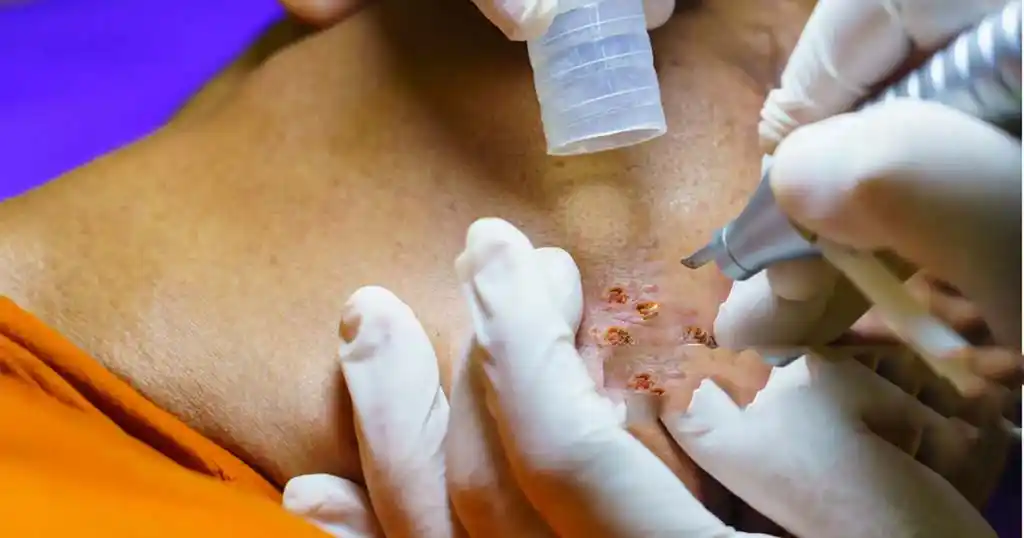
Keloids are removed through cryotherapy for keloid removal procedure by freezing it with liquid nitrogen.
This approach:
- Destroys abnormal fibroblasts
- Reduces scar volume
- Works best on small, or nodular keloids
Temporary depigmentation may also be experienced especially in darker skin types. Prudent use of technique can greatly reduce that risk. Cryotherapy is used for symptomatic relief and often combined with injections to improve long-term response.
How to Flatten a Raised Scar Without Risk?
A lot of patients and blog readers have this question “How to flatten a raised scar” in their mind.
There is no single solution.
Combination therapy with any of the following produces superior results:
- Steroid injections
- Laser sessions
- Cryotherapy
- Silicone-based topical therapy
Treatment plans must be individualized. The location, size, skin type, and previous response to treatment of the scar dictate management.
Preventing Keloid Recurrence
Successful care extends beyond treatment. Keloid recurrence is to be prevented in an ongoing manner.
Effective strategies include:
- Early therapy at the first sign of thickening
- Avoidance of unnecessary skin trauma
- Scheduled follow-ups
If the silastic or pressure therapy is indicated, it will be applied.
Patients with genetic predisposition are those who gain the most from follow-up in the long term.
Cost Considerations
Keloid treatment cost in Delhi depends on several factors:
Scar size and anatomical site
Number of sessions required
Combination of modalities used
Non-operative management is usually more cost-effective than operative treatment. With good preparations, an affordable keloid removal Delhi can be done without compromising on safety and results.
Importance of Expert Dermatological Care
Keloids require medical precision.
Improper or overzealous therapy can result in the scar becoming worse.
When the keloids are managed by an expert dermatologist for keloids, it leads to:
- Accurate assessment
- Evidence-based therapy selection
- Reduced side effects
- Lower recurrence risk
Experience directly impacts results.
Final Thoughts
Keloids can be stubborn, but they are also treatable.
The use of non-invasive, up-to-date methods will lead to improvement without having surgical traumatization.
Easy, timely treatment, the right treatment choice, and an expert follow up, may make that scar flatten and keep it under control. Things always work better when they are addressed early.
For custom advises, you can consult an experienced skin doctor in Delhi who is expert in non-surgical treatment for keloid.
Frequently Asked Questions
Q: Can keloids be treated without surgery?
A: Yes. Several keloids are successfully treated with non-surgical modalities such as intralesional steroid injections, laser, and cryotherapy. These techniques can help to flatten raised scars and decrease the itching without surgery; also, these can reduce the risk of a relapse.
Q: What is the most effective non-surgical keloid treatment?
A: Not a single treatment can be named as best for non-surgical keloid treatments. Results of non-surgical therapy for keloid depends on the scar size, location of scar, type of skin, and response to therapy in individual patient. Sometimes, dermatologists inject steroids, provides laser treatment, or cryotherapy to get the optimum results.
Q: How do intralesional steroid injections help keloids?
A: Intralesional steroid is used to minimize inflammation and inhibit the production of too much collagen in the scar. They help soften keloids, flatten raised tissue, and relieve itching and tightness over multiple sessions.
Q: Is laser treatment effective for keloid scars?
A: Yes. Evidence suggests laser treatment may help lessen the color, thickness, and texture of keloid scars. It can also be used in association with other non-operative treatments to improve the results and the aesthetics of scarring.
Q: Does cryotherapy permanently remove keloids?
A: For nodular or small scar keloids, cryotherapy may result in substantial reduction. Long term results will last indefinitely, some people may require more sessions to maintain that effect.
Q: What factors affect the cost of non-surgical keloid treatment?
A: The nonsurgical keloid removal cost varies based on scar size, how many treatment sessions you’ll need, and the type of treatments used. Non-surgical treatment cost lesser compared to surgery.
Q: Can keloids come back after non-surgical treatment?
A: Keloids has the tendency to recur, particularly in those with a hereditary predisposition. However, early treatment, sensitively combined treatment, and a regular follow-up is going to greatly lower the recurrence rates.
Medically Reviewed By
Dr. Navin Taneja, Best Skin Doctor & Dermatologist in Delhi
The National Skin Centre – South Delhi